
Kora — Internal AI Knowledge Assistant
An internal AI assistant that lets employees ask questions in plain English and get precise, cited answers drawn only from the organisation's own documents.
View Project
AI products need more than a model. They need reliable software, useful data, strong architecture, secure infrastructure, clear workflows and a way to measure whether the system is actually working. I design and build those systems end to end.
AI Agents · RAG · AI Automation · Multi-Agent Systems · AI Products · AI Systems Architecture
A production AI system sits inside a larger engineering environment. It needs access to the right information, the right tools, the right business rules and the right users. It also needs safeguards, evaluation, monitoring and a clear path for humans to intervene.
Designing agents that can reason through defined tasks, use tools, retrieve information, make controlled decisions and execute multi-step workflows.
Agent orchestration, tool calling, task planning, memory where appropriate, structured outputs, human escalation.
Building systems that allow AI applications to retrieve relevant information from approved company knowledge before generating responses.
Document ingestion, chunking, embeddings, vector search, metadata filtering, retrieval pipelines, citations and evaluation.
Connecting AI capabilities to business workflows so repetitive work can be handled automatically while keeping people involved where necessary.
Triggers, workflows, business rules, APIs, notifications, approvals and integrations.
Designing specialised agents or workflows that divide complex research or operational tasks into manageable components.
Agent coordination, specialised roles, task delegation, synthesis and controlled execution.
Building AI-powered products from concept and prototype through production software.
Product architecture, UX, APIs, model integration, data systems, evaluation and deployment.
Engineering reliable applications around large language models rather than relying on raw model output.
Prompt and context design, structured generation, tool use, guardrails, evaluation and application integration.
Designing the architecture that connects models, data, software, infrastructure and people into a reliable system.
System design, data flows, APIs, security, scalability, observability and deployment strategy.
Measuring whether an AI system is producing useful, safe and reliable outputs over time.
Test datasets, evaluation criteria, human review, tracing, quality monitoring and iterative improvement.
A typical AI system may connect several layers. The exact architecture changes depending on the business problem, data, users and operational requirements.
01 $ user_or_business_event — A person, message, document, transaction or system event starts the workflow.02 $ application_layer — The product or interface captures the request and controls the user experience.03 $ orchestration — The system decides what AI task, workflow or tool should run.04 $ knowledge_and_data — The system retrieves the information required for the task.05 $ model_layer — One or more AI models process the request within the defined context.06 $ tools_and_integrations — The system can call approved APIs, databases or business tools where required.07 $ validation_and_guardrails — Outputs are checked against rules, schemas or evaluation criteria.08 $ human_review — Sensitive, ambiguous or high-impact actions can be routed to people.09 $ monitoring_and_evaluation — The system is measured and improved using real usage and evaluation data.
A typical AI system architecture flows as follows:
AI automation combines models with business rules, triggers, APIs and existing software into a workflow that can understand information, decide and act.
The stack is selected around the requirements of the system rather than forcing every project into one technology set.
Discovery — Understand the business problem, users, workflow, data and constraints.
AI feasibility — Determine whether AI is actually useful and where it should sit in the workflow.
Architecture — Define the system components, data flows, models, integrations and human controls.
Prototype — Build the smallest useful version to validate the core behaviour.
Evaluation — Test quality, reliability, failure modes, cost and user experience.
Production build — Engineer the full application, integrations and infrastructure.
Deployment — Launch the agreed system and establish monitoring.
Iteration — Improve the system using feedback, evaluation and real-world usage.
AI systems should have clear boundaries. Where an action is sensitive, irreversible or high-impact, the system should route to a person.
FAQ response sent
Answered from approved knowledge base
Refund request — $340
Exceeds auto-approval threshold
Contract clause flagged
Non-standard liability terms detected
Startups
AI product development, prototypes and MVPs.
Growing businesses
Automation, customer experience and operational systems.
Enterprises
Internal knowledge, workflow automation and integrated AI systems.
Professional services
Research, document and knowledge workflows.
Technology teams
AI capabilities that need to integrate into existing software.
An internal AI assistant that lets employees ask questions in plain English and get precise, cited answers drawn only from the organisation's own documents.
Turns raw discovery-call notes into a complete, branded scope-of-work document in under 10 minutes instead of the two to three hours a manual proposal typically takes.
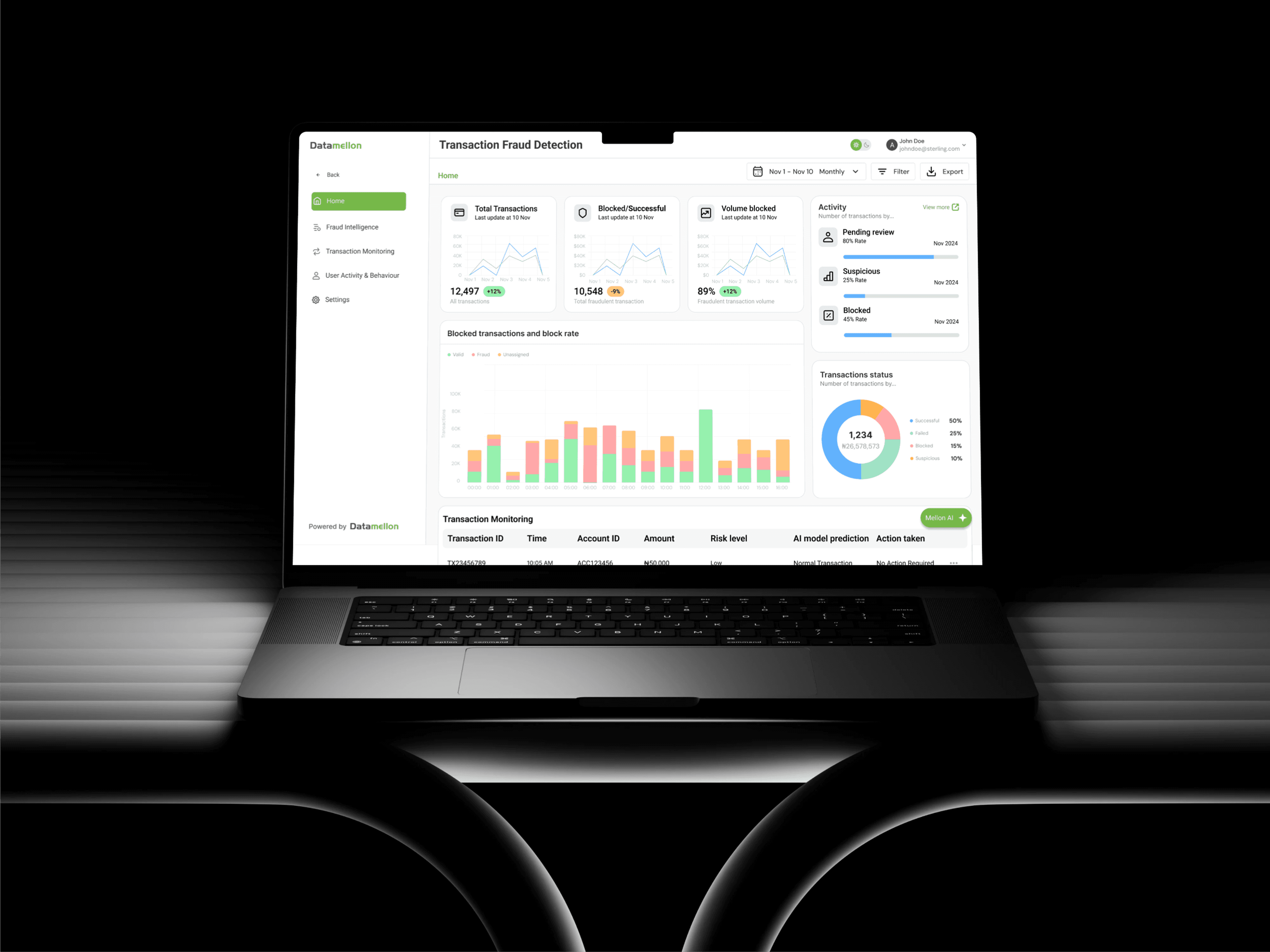
A unified AI platform for real-time fraud detection, AML/CTF monitoring, and automated compliance workflows.
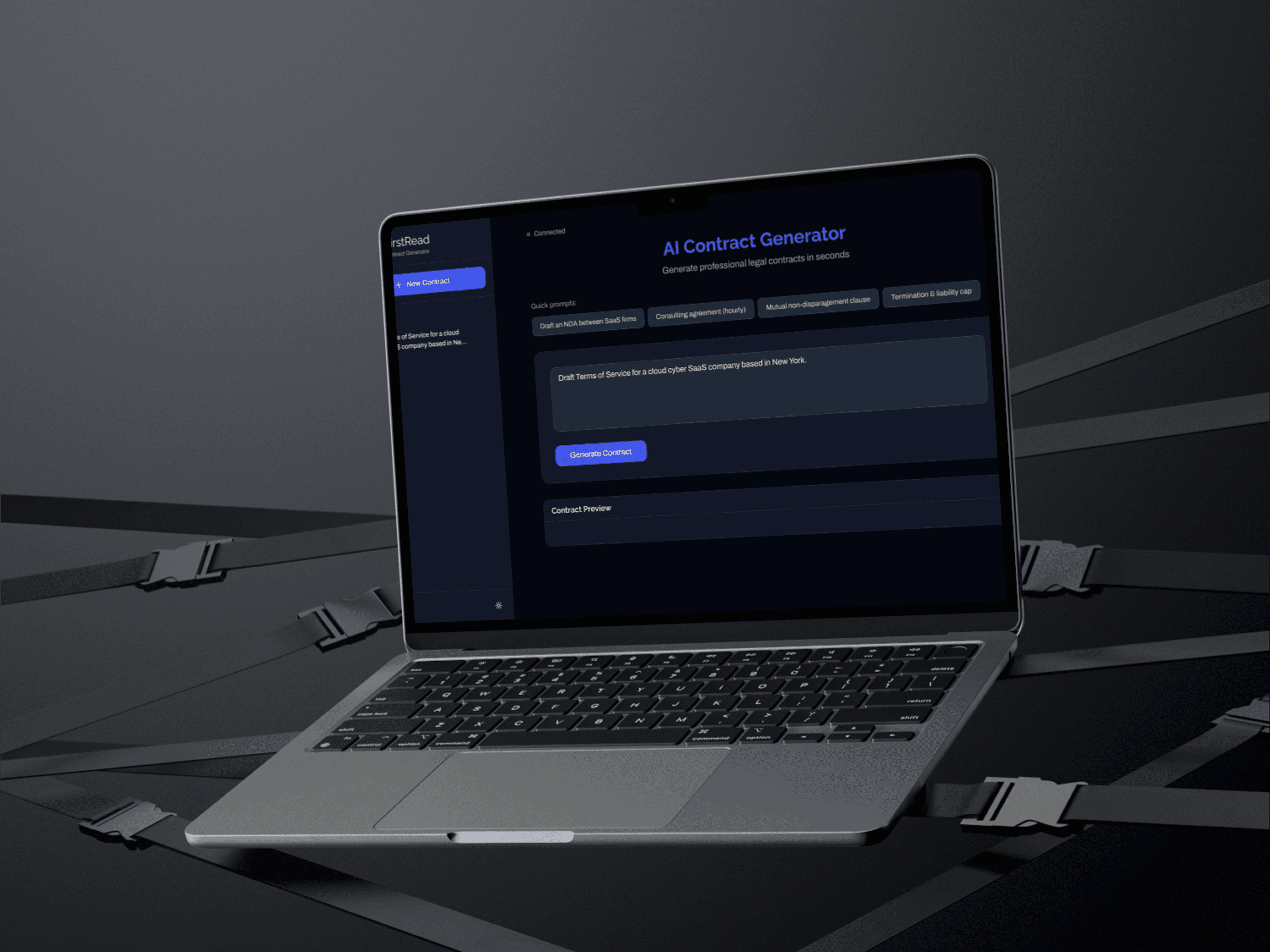
A web app that generates fully formatted legal contracts in real time based on user input.
A concept for a research system where specialised agents collect, analyse and synthesise information into structured, human-reviewed decision support.
Have a different question? Bring it directly and we can work through it together.
Ask Your QuestionAI engineering is the work of designing and building complete applications and systems around AI models. That can include data, retrieval, agents, APIs, software, infrastructure, evaluation and human workflows.
No. The architecture depends on the problem. Some workflows are best solved with traditional software, some with AI-assisted workflows, some with retrieval systems and some with controlled agentic systems.
Yes. AI can be designed as part of an existing product, internal tool or business workflow where the available systems and APIs support the integration.
Yes. The AI Solutions catalogue provides examples of common systems, but custom systems can be designed around a specific organisation's workflow and requirements.
Yes. ERIN is based in Lagos, Nigeria and works with businesses and organisations globally through remote collaboration.
Reliability depends on the system. Common engineering practices include grounded retrieval, structured outputs, validation, evaluation, monitoring, controlled tool access and human escalation.
Bring me the problem, workflow or product idea. We can work through what should be automated, where AI adds value, what needs to remain human and what the system would need to integrate with.
Start a Conversation